

Skin health should be a human right, not a privilege.
2 billion people all over the world suffer from skin disease, yet fewer than half of them have access to dermatological care.1,2
L’Oreal Act for Dermatology is committing 20 million euros, over 5 years, to fund access to skin health worldwide via four Acts.
Act 1. Pioneering Knowledge on access to skin health
This pillar aims to understand the main barriers to skin health, including knowledge gaps for all skin colours and the impact of climate change.


L’Oréal Dermatological Beauty, en asociación con las Ligas Internacionales de Dermatología (ILDS), lanzó el Observatorio Global de Acceso a la Salud de la Piel, la primera encuesta global para mapear el paisaje actual del sistema de salud en dermatología.
Investiga la distribución global de dermatólogos, las barreras que enfrentan los pacientes para acceder a la atención dermatológica en cada país y el acceso a proveedores de salud de la piel "sustitutos" en desiertos dermatológicos. El estudio está actualmente en curso, con resultados publicados esperados para 2025.
Act 2. Advocating Skin Health for all
This pillar aims to raise awareness of the skin health crisis as a public health issue.
Our advocacy desk will elevate awareness of the skin health crisis as a public health issue among scientific societies, governments, public institutions, and the private sector.
The data that will be collected through our Global Skin Health Observatory will be instrumental in our efforts.
The Stigmatization Holistic Tool in Dermatology (PUSH-D) will also be crucial. This tool allows us to scientifically and systematically measure the mental health burden associated with skin conditions.3
Our advocacy desk will elevate awareness of the skin health crisis as a public health issue among scientific societies, governments, public institutions, and the private sector.
The data that will be collected through our Global Skin Health Observatory will be instrumental in our efforts.
The Stigmatization Holistic Tool in Dermatology (PUSH-D) will also be crucial. This tool allows us to scientifically and systematically measure the mental health burden associated with skin conditions.3

Act 3. Empowering skin health careers with Education
Studies reveal significant barriers for lower- and middle-income countries (LMICs) regarding publishing and accessing dermatology research, including high costs, limited resources, and bias toward high-income country topics.4,5 This creates a two-fold challenge for LMICs: affordability/access and attracting the interest of publishers.
This pillar aims to provide resources for education and training to empower doctors and frontline carers to provide wider and greater access to skin health.
This pillar aims to provide resources for education and training to empower doctors and frontline carers to provide wider and greater access to skin health.
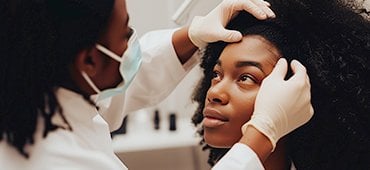
Act 4. Spreading Skin Health Solutions to all


Despite the rising occurrence of skin disease there is a shortage and uneven distribution of dermatology-trained clinicians. Progress in improving access to dermatologic care necessitates the involvement of those with lived experiences; to ensure they meet the unique community needs.6
Every four years, the International League of Dermatology Societies and L'Oréal partner to recognize five impactful social initiatives led by dermatologists worldwide.
Every four years, the International League of Dermatology Societies and L'Oréal partner to recognize five impactful social initiatives led by dermatologists worldwide.
References:
1. GBD 2017 Disease and Injury Incidence and Prevalence Collaborators. Global, regional, and national incidence, prevalence, and years lived with disability for 354 diseases and injuries for 195 countries and territories, 1990-2017: a systematic analysis for the Global Burden of Disease Study 2017. Lancet. 2018. 10;392(10159):1789-1858.
2. Freeman E E. Global health dermatology: An emerging field addressing the access to care crisis. Indian J Dermatol Venereol Leprol. 2024;90:3–4.1.
3. Ezzedine K et al. Patient Unique Stigmatization Holistic tool in dermatology (PUSH-D): Development and validation of a dermatology-specific stigmatization assessment tool. J Eur Acad Dermatol Venereol. 2023;37(2):443-450.
4. J. Akinwuntan et al. Quantifying Open Access Publication Trends in the Top Six Dermatology Journals. EADV Congress 2024 (Poster).
5. S. Jain et al. Characterizing Disparities in Dermatology Publishing: A Bibliometric Analysis of Authorship Trends. EADV Congress 2024 (Poster).
6. E. Freeman et al. Characterizing Global Dermatologic Engagement and Needs: a cross-sectional survey from 83 countries. EADV Congress 2024 (Poster).
2. Freeman E E. Global health dermatology: An emerging field addressing the access to care crisis. Indian J Dermatol Venereol Leprol. 2024;90:3–4.1.
3. Ezzedine K et al. Patient Unique Stigmatization Holistic tool in dermatology (PUSH-D): Development and validation of a dermatology-specific stigmatization assessment tool. J Eur Acad Dermatol Venereol. 2023;37(2):443-450.
4. J. Akinwuntan et al. Quantifying Open Access Publication Trends in the Top Six Dermatology Journals. EADV Congress 2024 (Poster).
5. S. Jain et al. Characterizing Disparities in Dermatology Publishing: A Bibliometric Analysis of Authorship Trends. EADV Congress 2024 (Poster).
6. E. Freeman et al. Characterizing Global Dermatologic Engagement and Needs: a cross-sectional survey from 83 countries. EADV Congress 2024 (Poster).

Consigue acceso gratis ilimitado a otros artículos y recursos como este
L'Oreal Dermatological Beauty Pro es una comunidad digital destinada a mejorar la práctica diaria en dermatología de los profesionales de la salud, a través de las últimas investigaciones científicas, formación y cienca sobre la piel y el cabello
Regístrate gratís aquí¿Ya estás registrado? Accede aquí