

Pr. Thierry Passeron: Skin and Exposome – What's known? What's new?
 Août. 2021
Clinical Presentation
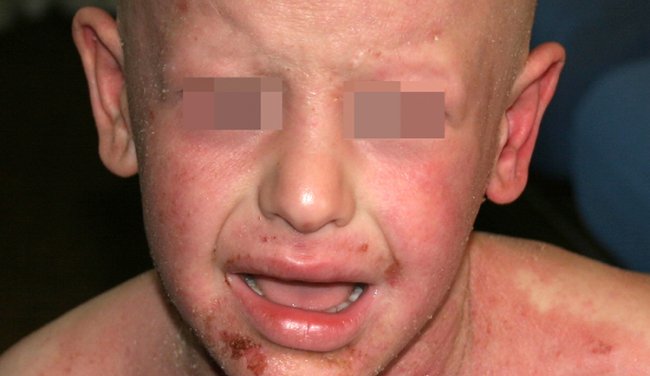
A boy around four years’ old consulted at the paediatric dermatology department for atopic dermatitis (AD), having started in the third month of life. The AD seems to have worsened in the weeks before the consultation. Also, a previous history of alopecia areata was noted, with onset from the second year of life.
Physical Examination
At the consultation, the child presented with highly severe atopic dermatitis, the related pruritus being intolerable on a day to day basis. The alopecia areata is complete.
Laboratory Result
The IgE are elevated (15,700 IU/ml!) and the RAST shows polysensitisation to the usual trophallergens and air-borne allergens.
Diagnosis
Atopic dermatitis related to alopecia totalis.
Management and outcome
The patient is treated with cyclosporin at the dose of 5 mg/kg/day for one month. In light of the good result, the cyclosporin is gradually reduced and discontinued after 2 months. At the next consultation, after the stop-therapy, the hair is effectively growing back, but the dermatitis has once again become very uncomfortable, requiring treatment combining dermocorticosteroids with a vitamin ointment again to treat the dry skin.
A combination of tacrolimus 0.03% in equal parts with the vitamin ointment is recommended at home afterwards to replace the topical dermocorticosteroids. Therefore the disease is improved but not fully under control. 10-week intermittent cyclosporin treatment is started (week-end therapy at 5 mg/kg/day). The result is very good and the skin effectively improved with emollients only, applied no less than twice a day.
In light of the efficacy of this treatment regimen, we decided to continue, but at a dose reduced by half (2.5 mg/kg/day for the week-end) for the next six weeks. The disease seems therefore almost fully controlled and the tests (standard blood test, kidney function and blood pressure) remain normal.
The same regimen is continued for the next three months. The week-end therapy was spaced out every 10 days for 1 month then every two weeks for three months.
Finally, after the four months, the patient seems to be a different person. A healthy looking boy with a full head of hair and almost no signs of his atopic dermatitis, now well-controlled, in just 9 months, with emollients.
Use of short-term dermocorticosteroids or topical calcineurin inhibitors is episodic and rare to such an extent that the patient is treated by the parents when necessary, and for the remainder, he is getting on fine with his emollients, and his... hair.
Teaching points
Alopecia areata is often associated with other comomorbidities, including atopic dermatitis. The relationship with a type of atopy is associated with alopecia areata of less positive prognosis, and this all the more where there are filaggrin mutations.
Shared activation pathways in Th2 lymphocytes is believed to explain the effective response of the therapies used in atopic dermatitis on alopecia areata.
New biological treatments for AD are shown to be effective in alopecia areata.
Treatment for both is comprehensive, combining systemic and local treatments, not forgetting emollients.
Bibliography