





IS MORE THAN A BARRIER
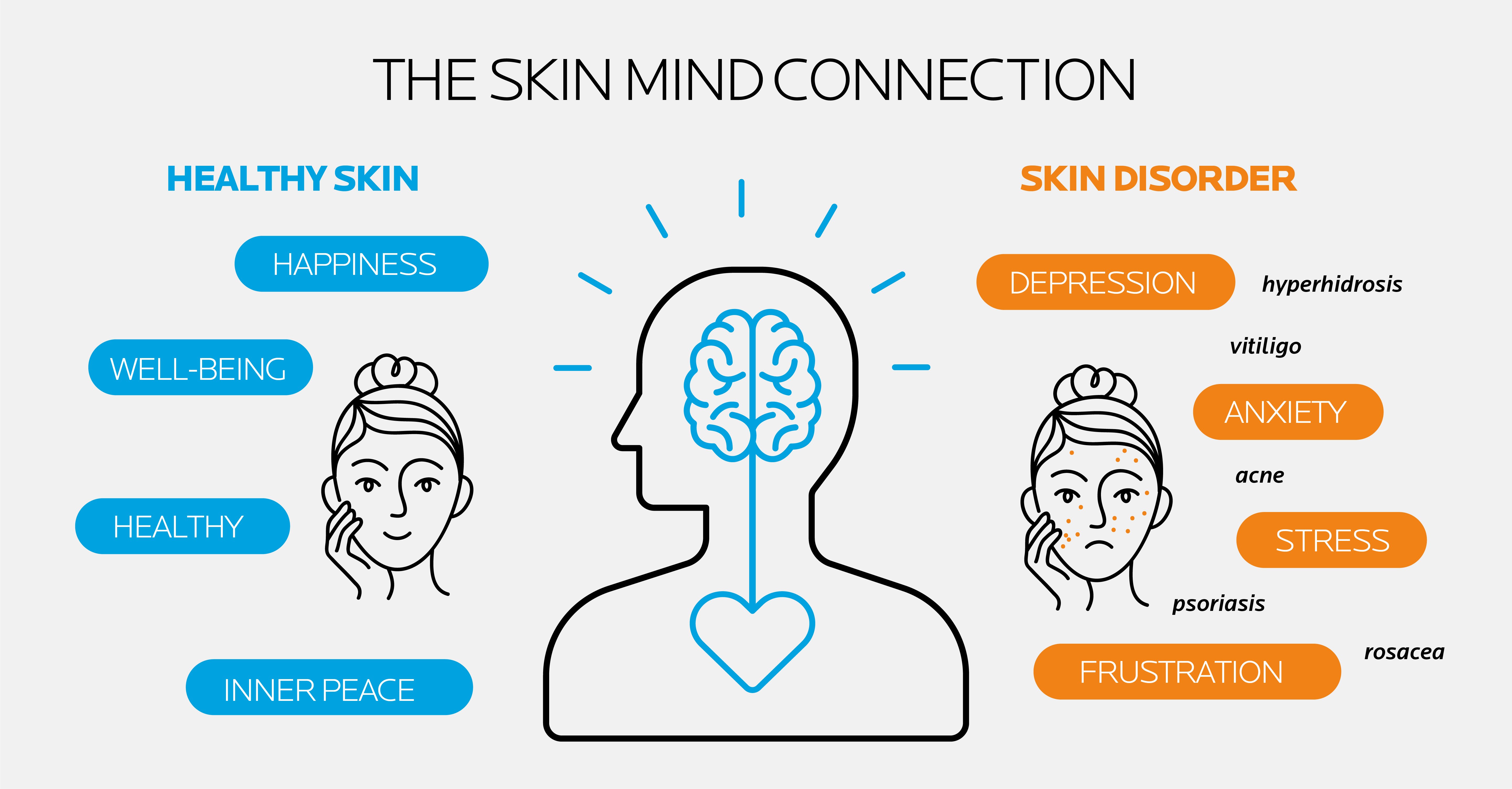

Stress, anxiety, and depression can worsen skin conditions, while visible skin disorders can trigger emotional distress such as stigma and social anxiety.
Research shows that integrated care, addressing both mental health and skin health, leads to better outcomes and fewer relapses, supporting sustainable well-being.
CLINICAL MANIFESTATIONS, PSYCHOLOGICAL COMORBIDITIES, AND EPIDEMIOLOGY
Inflammatory skin diseases often coexist with psychiatric comorbidities, creating a cycle
in which emotional distress both arises from and worsens skin inflammation.


INTEGRATED CARE
IS THE CORNERSTONE OF PSYCHODERMATOLOGY.
Combining dermatologic, psychological, and educational interventions improves immune balance and quality of life.
Dermatologists should be trained to recognise psychological comorbidities and be provided with the tools and necessary support.
Psychological factors influence skin, and skin conditions impact mental health,
driving stigma, distress, and reduced quality of life. Integrative, multidisciplinary
strategies are key. Dive deeper in the full chapter.
Read on to explore the impact of social media on dermatology, and how
opportunities for connection and education coexist with challenges of
credibility, influence, and digital well-being.