





ABSTRACT : In recent years, increasing evidence has demonstrated that visible light exposure (VL) can induce an alteration of redox homeostasis, an increase in cutaneous oxidative bioactive molecules, metalloproteinase activation, and the release of inflammatory mediators. Moreover, dark skin phototypes (IV-VI) have been demonstrated to be more susceptible to visible light exposure, showing pigmentary alteration.
Methods: Human skin explants from 3 different donors with dark skin phototype (IV-V) were cultured under physiological tension to retain in vivo skin physiology (TenBio model https://ten- bio.com/) and pretreated every day, before VL exposure, with an AO MIX.
Objective: Evaluate the protective effect of an antioxidant mix (AO MIX) composed of vitamin C, vitamin E, and Ferulic acid on dark skin (phototype V), exposed up to 7 days to VL radiation.
Result:

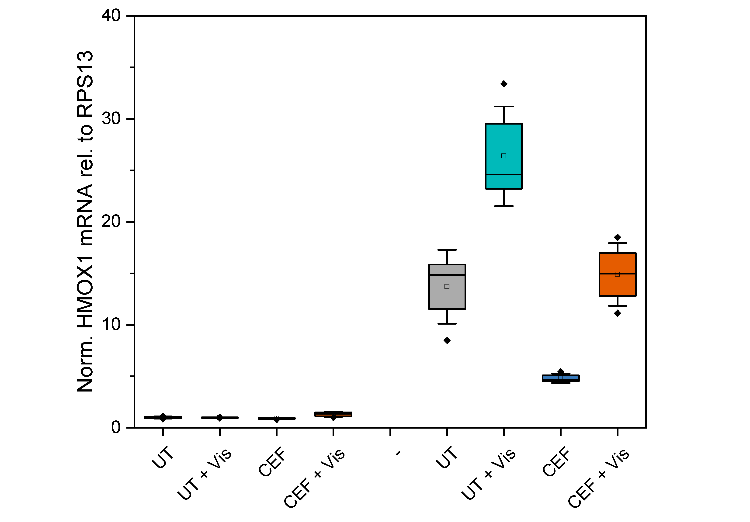
Visible light exposure increased oxidative stress and pigmentation markers in dark skin models. A topical antioxidant mix (Vitamin C, Vitamin E, Ferulic Acid) significantly reduced these markers at Day 2 and Day 3 (Fig. B). PCR analysis confirmed activation of antioxidant defense pathways (Nrf2-HMOX1), supporting protection against visible light-induced damage.
Conclusions: Our results confirmed the ability of VL exposure to induce alterations in redox skin homeostasis, characterized by a significant increase in oxidative stress damage (4HNE), the activation of antioxidant response (HO1), and changes in skin structure (collagen1). Indeed, a significant decrease in collagen1 protein expression, which represents a crucial component of the extracellular matrix, was observed in conjunction with a substantial increase in MMP2 expression levels, an important matrix metalloproteinase involved in the degradation of the extracellular matrix, leading to pigmentary issues such as post- inflammatory hyperpigmentation (PIH), already at early time point (DAY 2). Of note, pretreatment with AO MIX was able to prevent the VL photodamaged effects on darker skin phototypes (IV-VI) which are usually characterized by higher risk of photoaging and long- lasting hyperpigmentation compared to lighter-skin individuals.