




Symptoms/signs
52-year-old female patient.
She reports that a rash appeared on her face and torso about 15 days ago.
Patient photographs
Clinical presentation
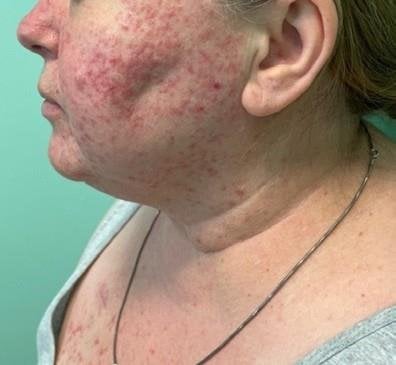
Physical examination of the skin revealed intensely erythematous follicular papules and pustules with a monomorphic appearance on the face and neckline. No comedones are observed.
Medical history
Following a diagnosis of stage IV adenocarcinoma of the colon, therapy was initiated with the FOLFOX combination (FOLinic acid, Fluorouracyl, OXaliplatin) + panitumumab. The latter is a monoclonal antibody that binds to the epidermal growth factor receptor (EGFR).
Differential diagnosis
Drug-induced folliculitis (acneiform rash)
Bacterial folliculitis
Acne vulgaris
Diagnostic tests
Bacterial culture from a pustule shows sterile content.
Description of the disease
Acneiform rashes are increasingly observed following the introduction of EGFR inhibitors into cancer therapy; globally they account for approximately 1% of drug-induced skin reactions. Other drugs associated with this clinical scenario include corticosteroids, also commonly used in oncology, and androgens (in this case, comedones may be observed). The time to onset is variable depending on the drug and dosage: in the case of EGFR inhibitors, the rash can occur acutely after 7-10 days of treatment and affects between 43 and 85% of patients. Results from clinical trials with different EGFR inhibitors showed a positive correlation between the intensity of folliculitis and treatment response and survival.