



Symptoms/signs
83-year-old male patient.
Reports fingernail changes three months after starting cancer therapy. Does not report associated symptoms.
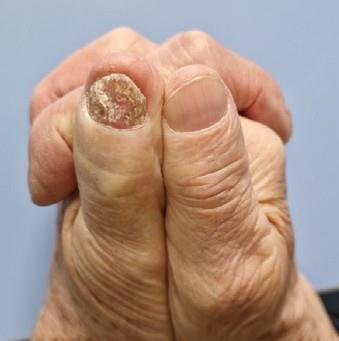
Patient photographs
Clinical presentation
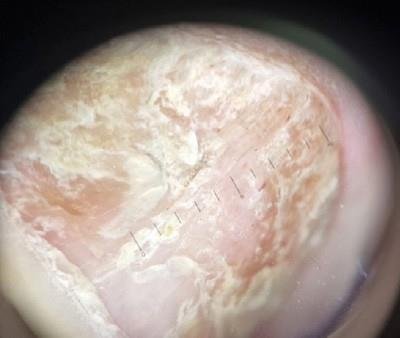
A physical examination of the skin revealed the following on the nails of the first, second and fourth fingers of the left hand and the fourth finger of the right hand: dystrophy of the nail plate with distal detachment from the nail bed (onycholysis) and some small subungual haemorrhages visible under dermatoscopy.
Medical history
The patient has metastatic non-small cell lung cancer with an EGFR-activating mutation and is being treated with the EGFR molecular inhibitor gefitinib.
Differential diagnosis
Other causes of onychodystrophy, such as trauma
Diagnostic tests
Clinical and dermatoscopic examination of all nails, together with a review of medication history, will guide the diagnosis correctly.
Description of the disease
Therapy-induced onychodystrophy usually affects many or all of the nails. The mechanism underlying nail changes is usually toxic and, for this reason, the condition is commonly associated with chemotherapy using cytotoxic agents. Nail changes typically associated with kinase inhibitors are paronychia with pyogenic granuloma formation in the case of EGFR inhibitors, and subungual splinter haemorrhages in the case of drugs that affect VEGFR.
Pharmacological treatment and patient instructions
Nail changes appear between one and three months after starting therapy.
Nail changes may improve spontaneously after stopping treatment.
Dermocosmetic management
CICAPLAST Baume B5+, a repairing and soothing balm that rebalances the skin microbiome, applied once or twice a day to promote skin repair, particularly around the nails.
Follow-up (adjuvant treatment outcomes)
In this case, a follow-up appointment was scheduled after 6 months, considering the slow response to treatment that is characteristic of nail appendages: the patient reported a subjective improvement in the appearance of the nail plate, which is supported by the restoration of the periungual skin and management of potentially traumatic factors, including hand washing.