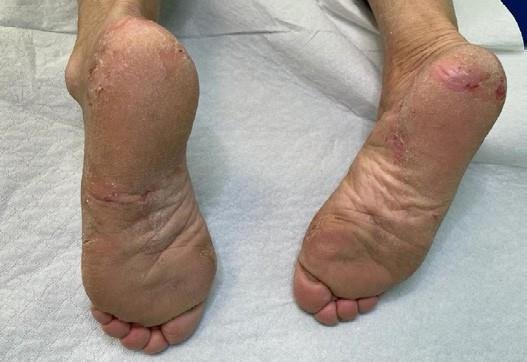





Symptoms/signs
63-year-old male patient.
Reports the appearance of painful thickening of the soles of his feet, approximately 2 months after starting therapy.
Patient photographs
Clinical presentation
A physical examination of the skin shows areas of yellowish hyperkeratosis located at the arch support points bilaterally.
Medical history
The patient is receiving an oral combination of dabrafenib (BRAF inhibitor) and trametinib (MEK inhibitor) for BRAF V600E mutation-positive advanced Stage IIIB melanoma. This targeted therapy was started approximately 2 months prior to the onset of skin manifestations.
Differential diagnosis
Psoriatic rash
Acral erythema induced by chemotherapy
Plantar keratoderma
Diagnostic tests
In relation to acral manifestations during chemotherapy, lesions associated with BRAF inhibitors show fewer signs of inflammation and milder symptoms of dysaesthesia. Examination of the entire skin area in this case revealed no suspicious signs of psoriasis.
Description of the disease
Pain-associated palmoplantar hyperkeratoderma has been reported in a variable proportion of subjects receiving molecular BRAF inhibitors, both as monotherapy or in combination, and is among the most common skin reactions associated with this class of drugs. The sole of the feet is more frequently affected than the palm of the hands.