




Symptoms/signs
55-year-old male patient.
The patient came to our attention due to a painful foot injury three months after starting treatment, which prevented him from wearing closed shoes for long periods.
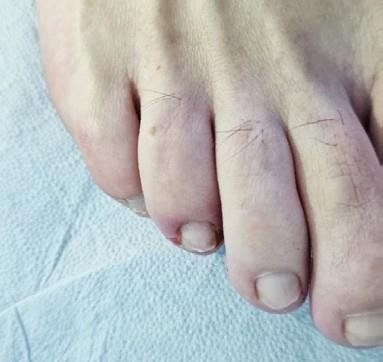
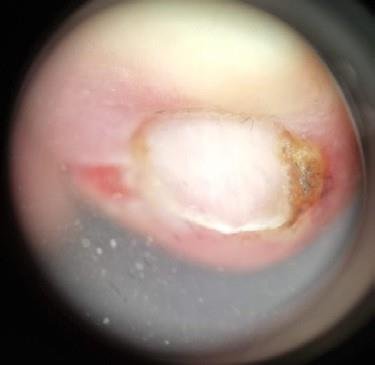
Patient photographs
Clinical presentation
A physical examination of the skin revealed erythematous papules mildly bleeding, similar in appearance to a periungual pyogenic granuloma, at the lateral nail fold of the fourth toe of the right foot.
Medical history
In September 2021, he was diagnosed with stage IVA (M1b) lung adenocarcinoma with EGFR-activating mutations, for which he underwent treatment with osimertinib, an EGFR molecular inhibitor.
Differential diagnosis
Tyrosine kinase inhibitor-induced paronychia
Acute paronychia
Onychocryptosis
Diagnostic tests
Clinical and dermatoscopic examination of all nails, together with a review of medication history, will guide the diagnosis correctly. Should the clinical picture suggest a bacterial superinfection, a culture test is recommended.
Description of the disease
The use of epidermal growth factor receptor (EGFR) inhibitor drugs commonly leads to the onset of paronychia associated with periungual granulomas approximately 1 to 3 months after starting therapy. This skin side effect subsides a few days after the end of treatment. Any fingernail or toenail can be affected by a pathogenic mechanism that is only partially understood.