




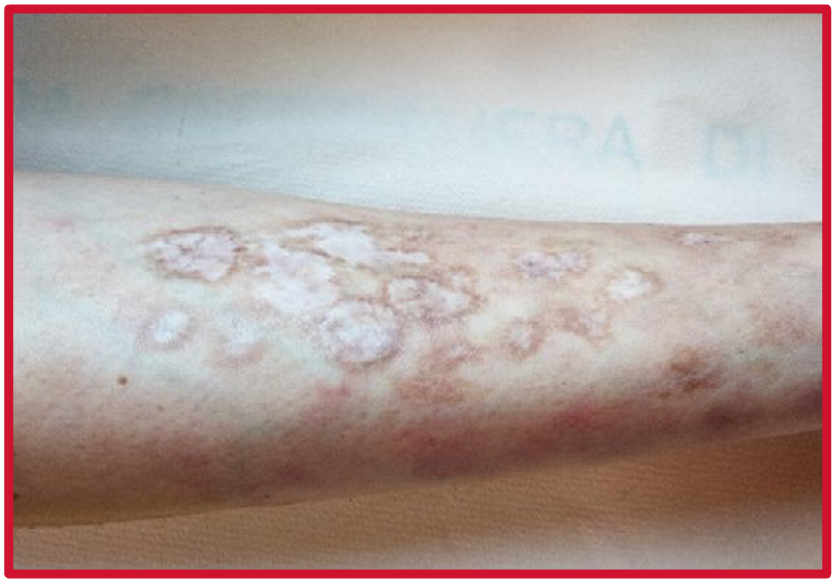
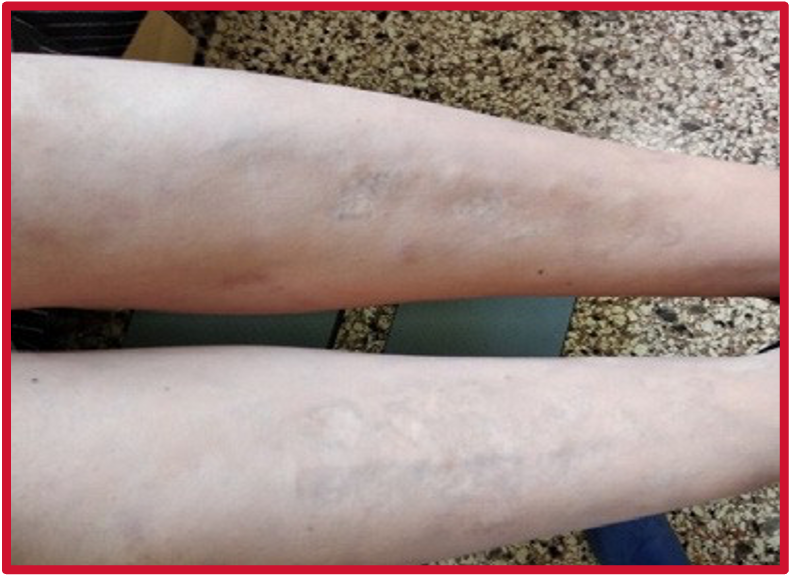
Patient photographs

Before After
Description of the disease
Pyoderma gangrenosum is a neutrophil-mediated skin disorder that is often associated with systemic diseases and, in rare cases, is induced by drugs. The typical presentation (classic form) is characterised by a variable number of ulcers usually affecting the pretibial surface of the lower limbs. The healing of these lesions results in atrophic scars that appear pitted and pigmented.
Dermocosmetic management
CICAPLAST Baume B5+, a repairing and soothing balm that rebalances the skin’s microbiome, applied locally in the evening
Adjuvant treatment follow-up
Drug-induced pyoderma is an uncommon event that, in haematology/oncology, has been associated with colony stimulating factors, tyrosine kinase inhibitors, immune checkpoint inhibitors, and methotrexate. The scarring caused by this condition is permanent and causes significant cosmetic discomfort: for this reason, camouflage is an effective strategy for improving the quality of life of those affected.
Camouflage
Material
Base cream
Yellow concealer
Powder
Foundation
Thermal spring water
Sponge
Powder puff
Technique
Apply the base cream.
Apply yellow concealer to the hyperpigmented edges of the lesions by dabbing.
Apply a coat of powder to set the concealer.
Apply the liquid foundation that most closely matches your skin tone by dabbing it on with a sponge and blending it over the entire leg.
Apply a thin layer of powder and blend everything together with a little thermal spring water.
Additional advice
The desire to conceal skin lesions influences clothing choices. In this case, at the end of the session, the patient stated: “I can finally wear a skirt!” As an alternative or in addition to camouflaging the affected area, it is advisable to avoid clothes with polka dots and small flowers and play it safe with plain colours (blue, green, purple, dark red).