




Patient photographs

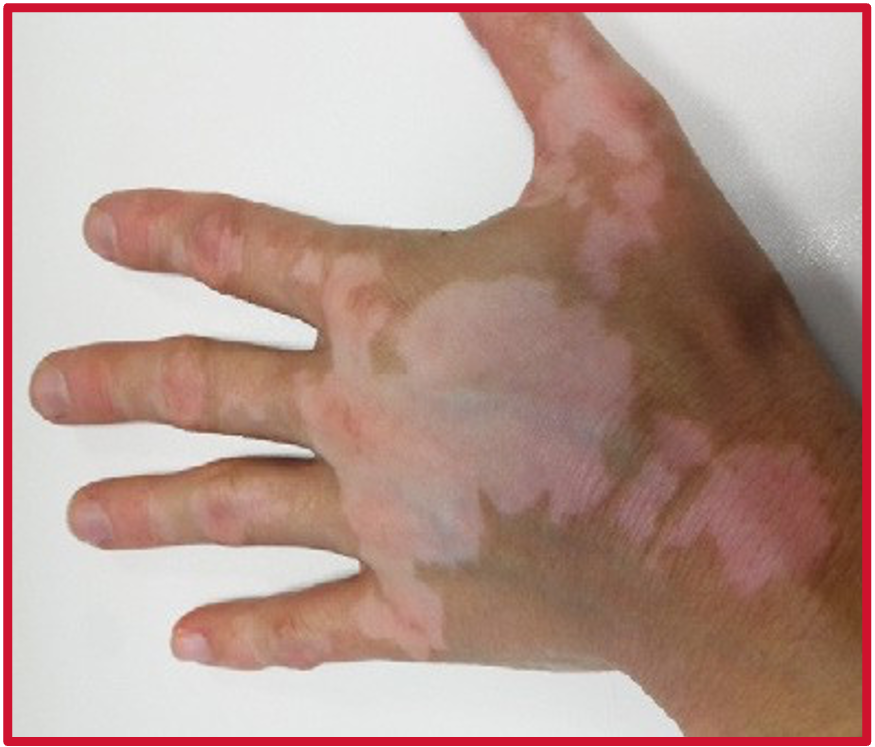
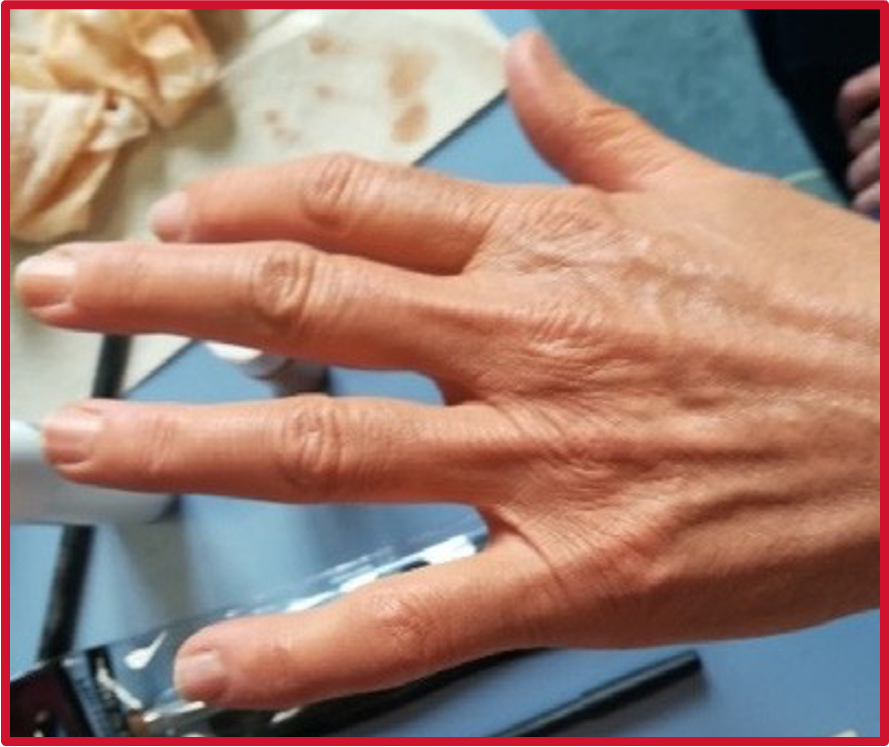
Before After
Description of the disease
In subjects receiving oncology immunotherapies, skin manifestations are the most common class of immune-related adverse events (irAEs) and are also the first toxicities to appear after initiation of treatment. In this group, vitiligo was typically reported in patients with metastatic melanoma. This typical effect is often not reported and generally no treatment is given, considering that it is limited to the skin and is often mild in severity. However, the negative impact of vitiligo on quality of life can be substantial, particularly in individuals with darker skin types and when the most exposed areas such as the face or hands are affected.
Dermocosmetic management
ANTHELIOS UVMUNE 400, SPF 50+ broad-spectrum protection, expertly designed for sensitive or reactive skin, offering protection against UVA, ultra-long UVA, and UVB radiation
Adjuvant treatment follow-up
Vitiligo is a persistent condition that does not change if immunotherapy is discontinued. For this reason, the use of camouflage appears to be the most encouraging strategy for responding to patients' cosmetic needs in everyday life: it provides immediate cosmetic benefits and can be used independently at home.
Camouflage
Material
Base cream
Green concealer
Clear concealer
Powder
Foundation
Thermal spring water
Sponge
Powder puff
Technique
Spread the base cream over your entire hand and wait for it to absorb.
On the most erythematous points, dab a little green concealer with a sponge to neutralise the redness.
At the edge of the vitiligo patch, where the contrast between the two colours is most evident, dab on a lighter (or yellow) concealer depending on how prominent this area is.
Apply a coat of powder with the appropriate puff to set the concealers.
Apply liquid foundation by dabbing it onto your entire hand; the foundation should then be blended as you move towards your fingers.
Apply powder to set everything, making the appearance more uniform, and spray on a little thermal spring water.
Additional advice
Colours can also help to make vitiligo less noticeable. It is advisable to avoid clothing with polka dots or small flowers, which visually recreate the patches of vitiligo, and instead opt for plain colours such as green, blue and dark red. A warm or cool shade of these colours should be chosen depending on the individual's skin undertone (warm/cool undertone). Finally, accessories help to divert attention away from whatever is considered to be the problem: large watches, rings, bracelets and glasses draw people's gaze where we want it and help us to stand out from the crowd.